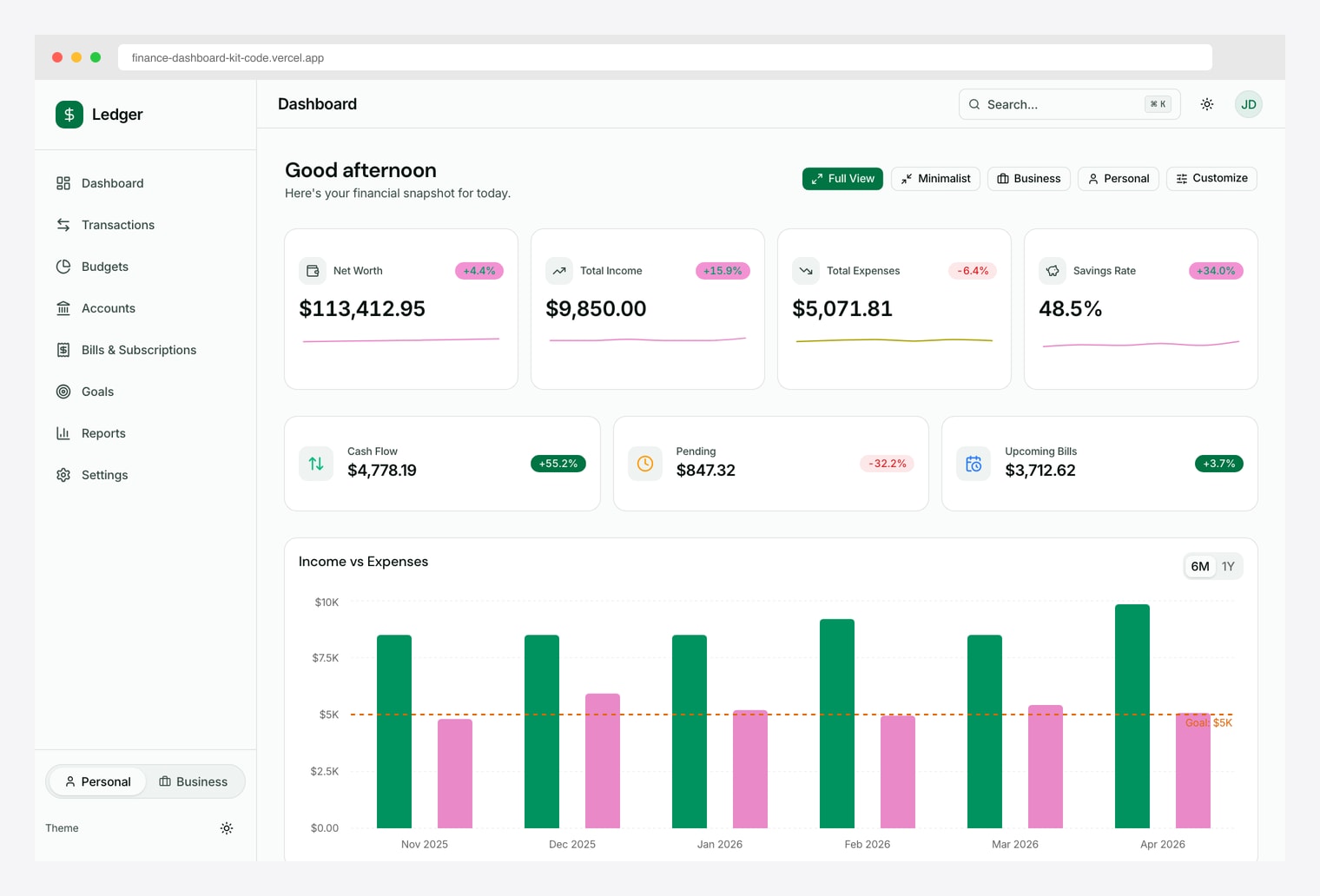
A modern finance UI usually covers KPIs, cash flow, transactions, and budgets. Banking and trading surfaces add portfolios, P&L, risk, and compliance. Building that from zero takes months — these templates and open-source platforms get you further, faster.
Below is the complete list mirrored from the widely shared fintech roundup: premium shadcn/ui finance kits, Bootstrap finance admins, and self-hosted accounting / core-banking options.
Full list
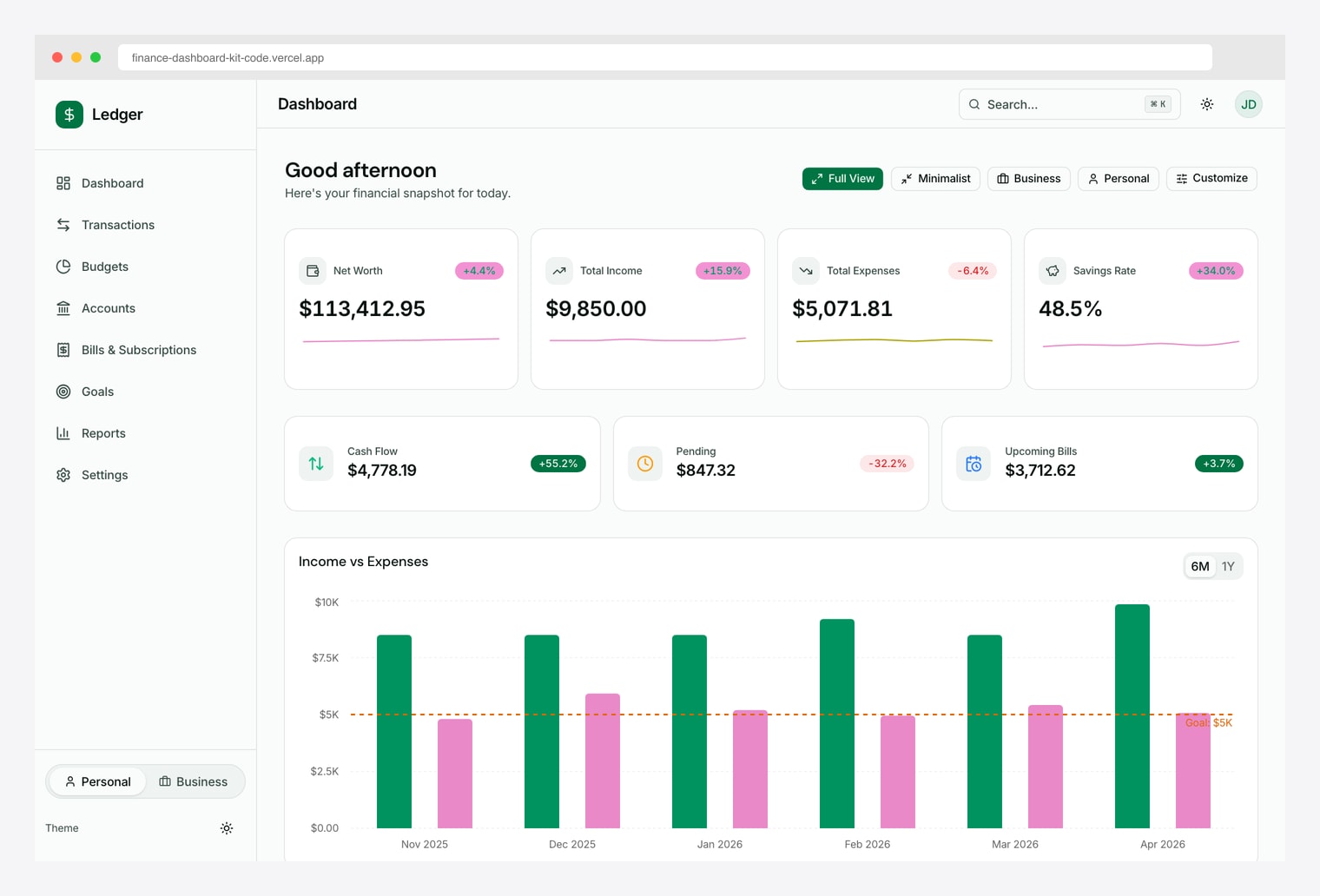
1. TheFrontKit Finance Dashboard Kit (Ledger)
Why it stands out: Next.js 16 + Tailwind v4 + shadcn/ui codebase with Personal / Business / Minimalist / Customize view modes. Sidebar covers Dashboard, Transactions, Budgets, Accounts, Bills & Subscriptions, Goals, Reports, Settings.
Built on the most current shadcn stack (Next.js 16, Tailwind CSS v4, React 19) — useful if you want to stay on the leading edge rather than inherit a v3 codebase. WCAG AA accessibility throughout. $99 one-time with a 7-day money-back guarantee.
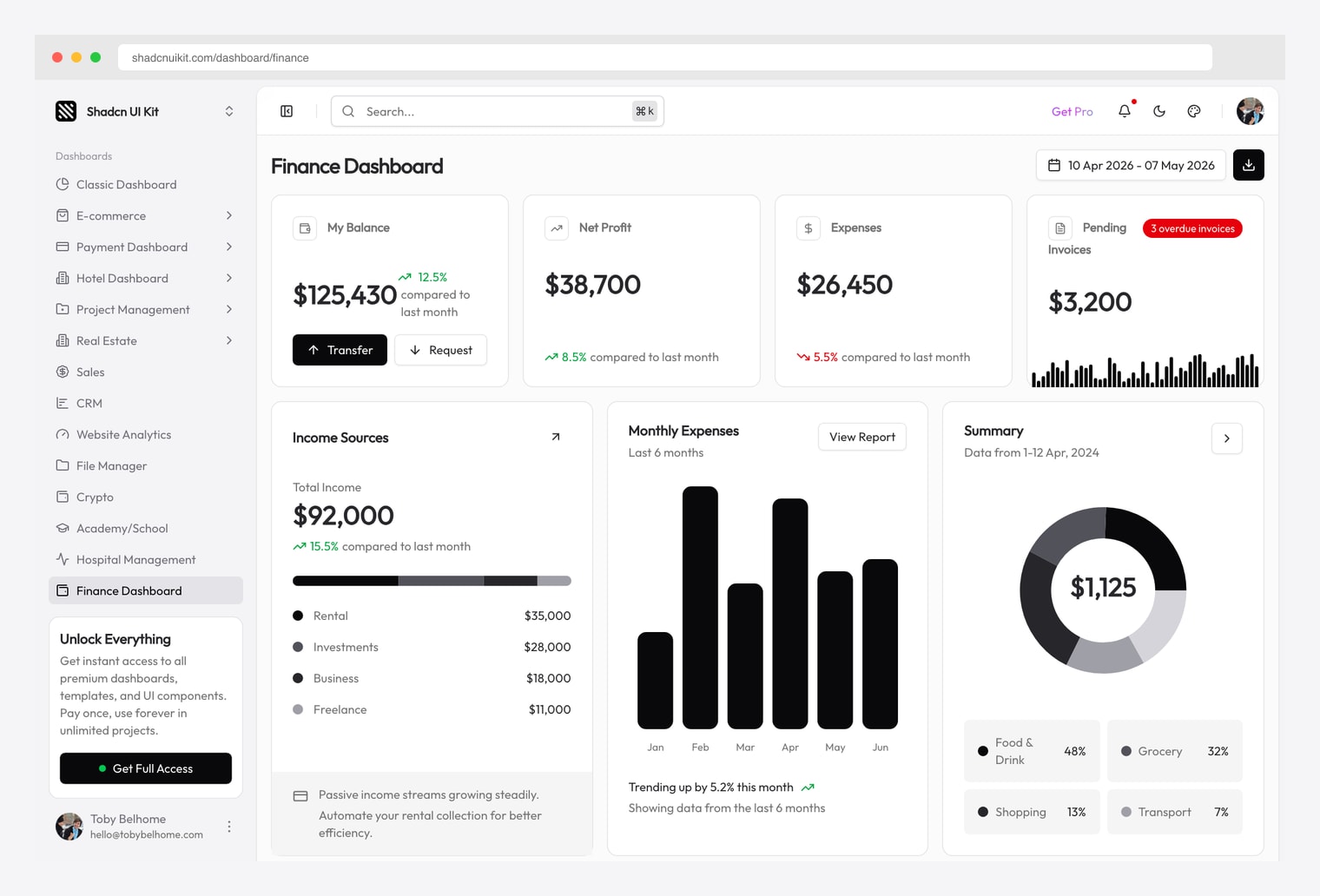
2. Shadcn UI Kit Finance Dashboard
Why it stands out: A single Finance dashboard page inside the Shadcn UI Kit Pro catalog. One Pro license unlocks all 18 dashboards (Finance, Hospital, Project Management, CRM, Real Estate, Sales, Hotel, Crypto, Academy, etc.) with light + dark themes, lifetime updates, and unlimited project use.
Same Pro license also covered in this crypto , healthcare , and LMS roundups — buy once, use across every dashboard surface.
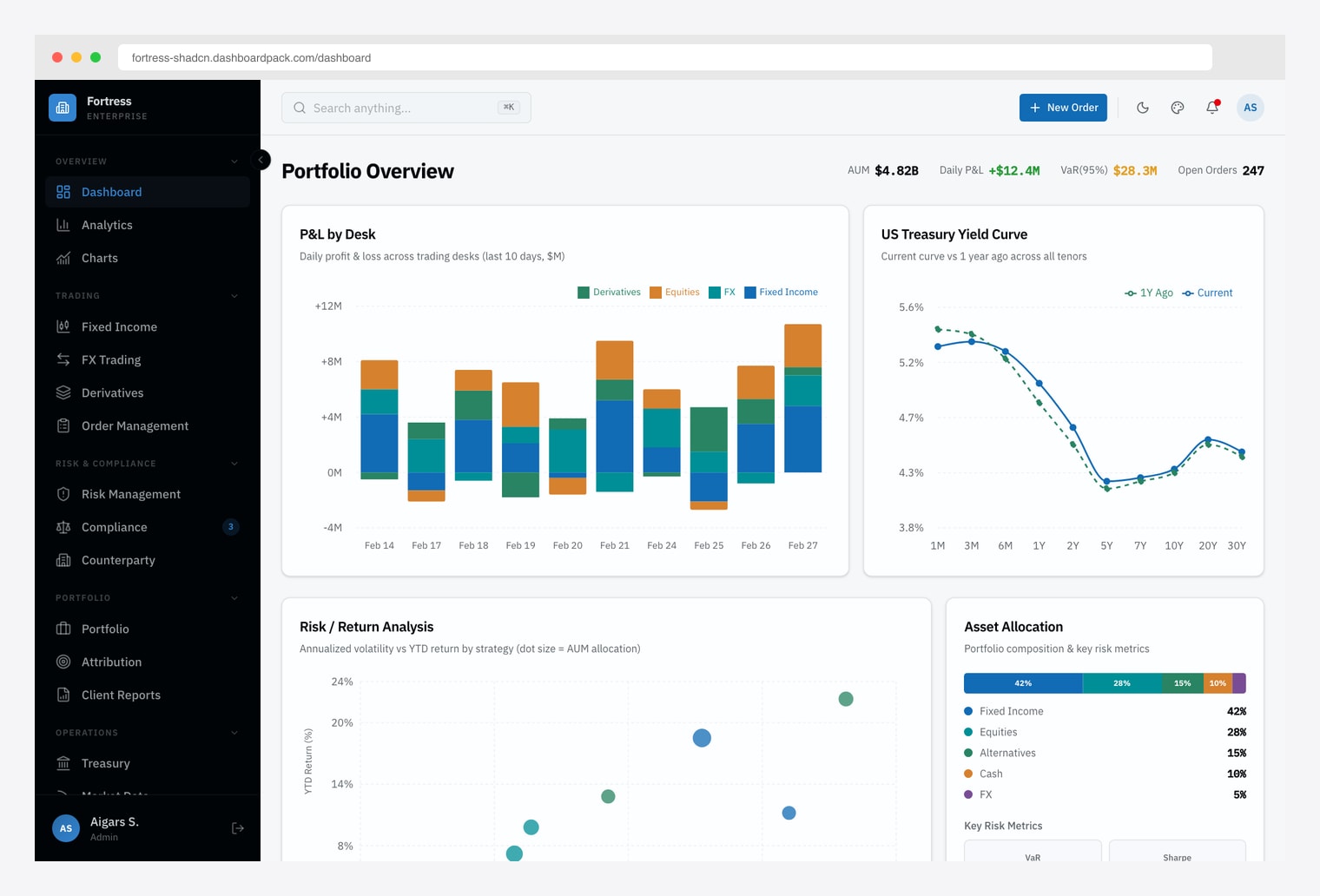
3. Fortress Shadcn (DashboardPack — Institutional Trading)
Why it stands out: Sidebar pages: Fixed Income, FX Trading, Derivatives, Order Management, Risk Management, Compliance, Counterparty, Portfolio, Attribution, Client Reports, Treasury, Market Data, Research. Typed Next.js + shadcn/ui codebase.
Most premium "finance" templates ship a personal-finance dashboard. Fortress is the rare one designed for hedge funds, asset managers, and prop desks — useful if you're building a Bloomberg-Terminal-class internal tool.
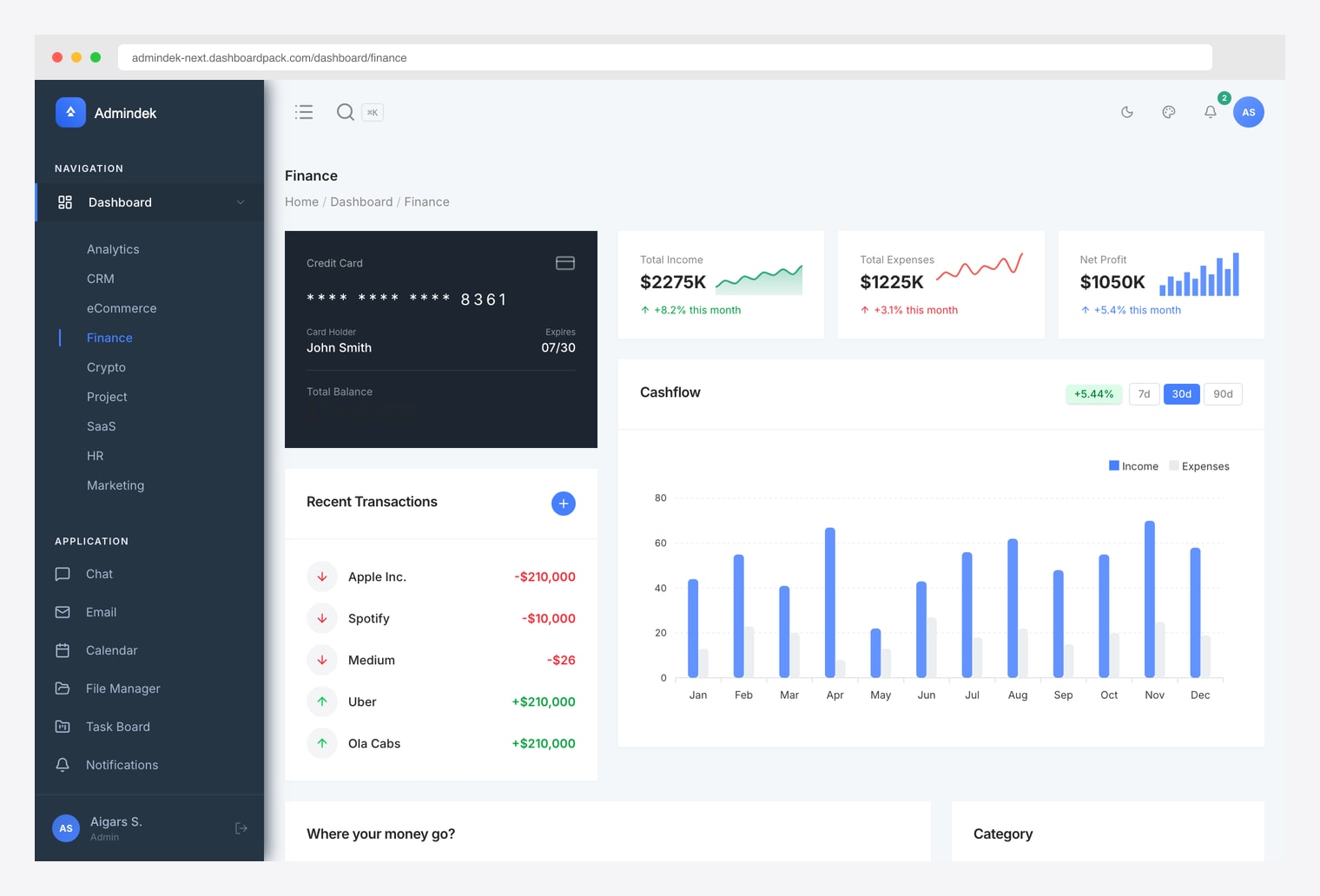
4. Admindek Finance (DashboardPack)
Why it stands out: A typed Next.js + shadcn/ui kit with 9 dashboards (Analytics, CRM, eCommerce, Finance, Crypto, Project, SaaS, HR, Marketing). Light + dark themes, RTL support, lifetime updates, $69 one-time.
Same family also covered in this crypto , HR , and project management roundups. Cheaper than TheFrontKit at $69 but on Next.js 15 / Tailwind v3 instead of the v4 stack.
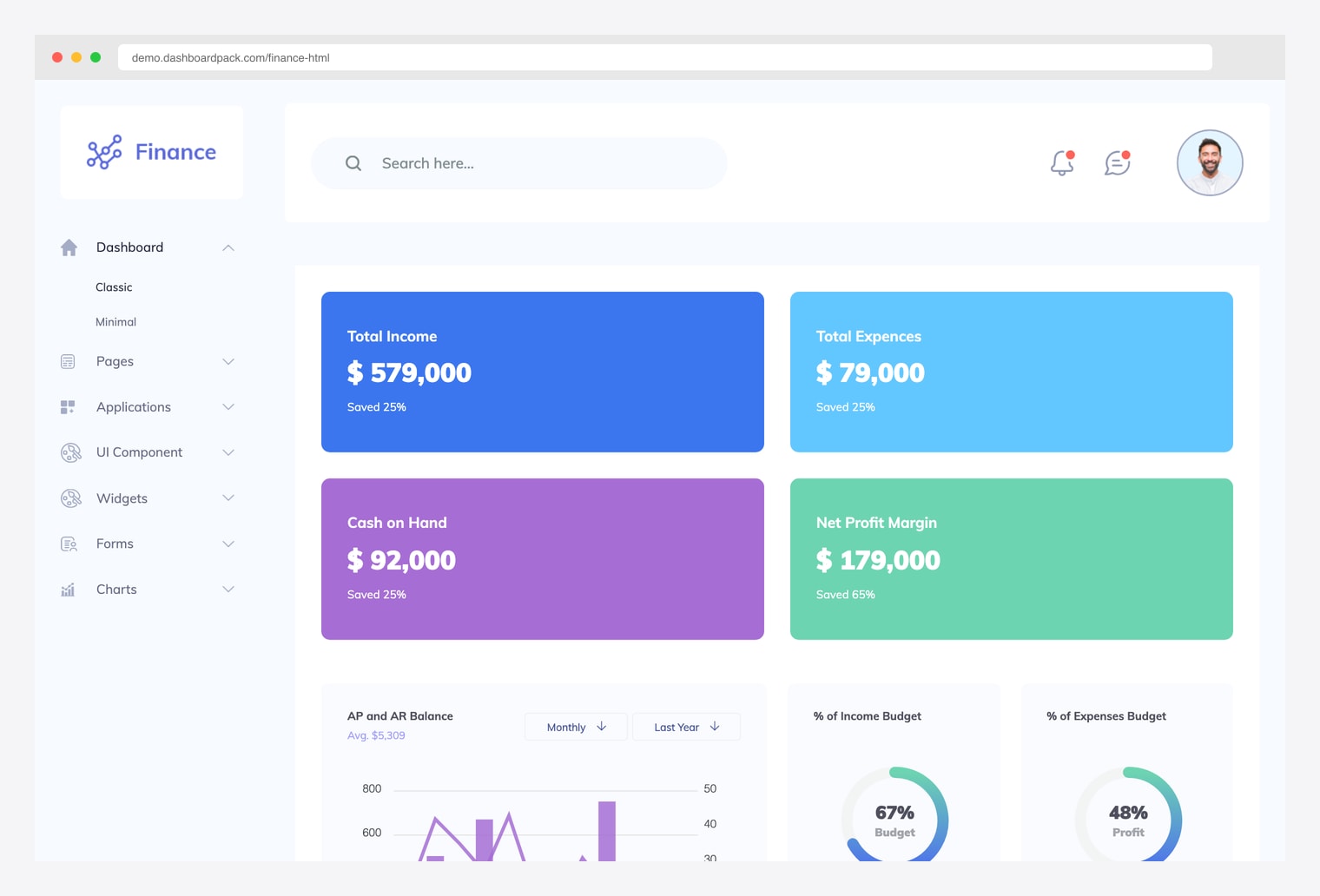
5. DashboardPack Finance HTML
Why it stands out: A static HTML + Bootstrap 5 + jQuery admin — no React, no build step. Includes Pages, Applications, UI Components, Widgets, Forms, and Charts sections, plus Classic and Minimal dashboard variants.
Useful when you need to drop a finance UI into a non-React backend (Laravel Blade, Django templates, Rails ERB) without retrofitting a frontend pipeline. Pair with our free Bootstrap 5 templates roundup for free alternatives.
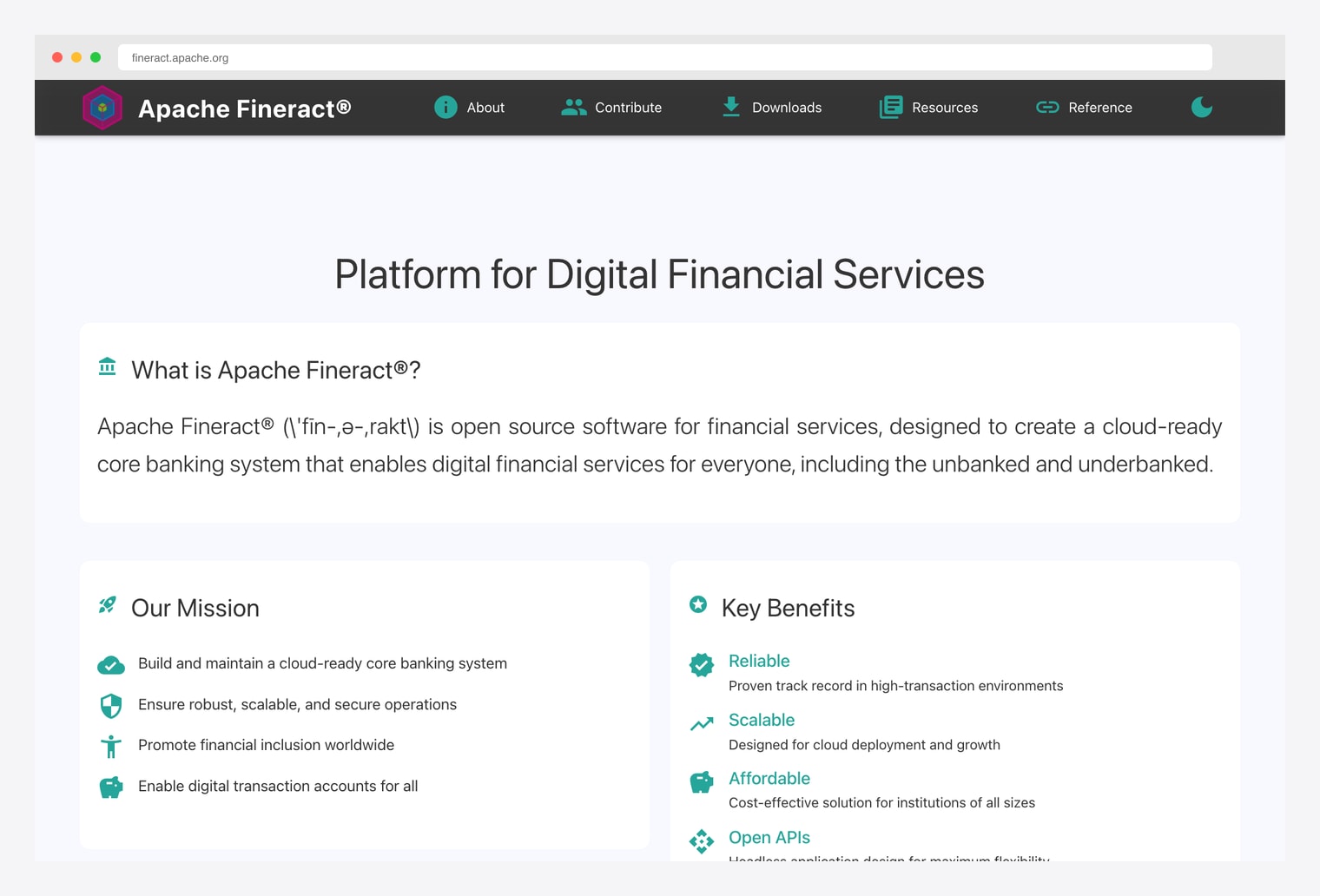
6. Apache Fineract
Why it stands out: Customer onboarding + KYC, savings, loans with full lifecycle, fixed deposits, recurring deposits, share accounts, double-entry accounting, reporting, and a headless REST API. Frontends like Mifos and Mifos Mobile sit on top.
Not a UI template — a backend platform. Pair it with one of the open-source frontends (Mifos X Web App, Mifos Mobile) or build your own using one of the premium dashboards above. Used in production by microfinance institutions across Africa, Asia, and Latin America.
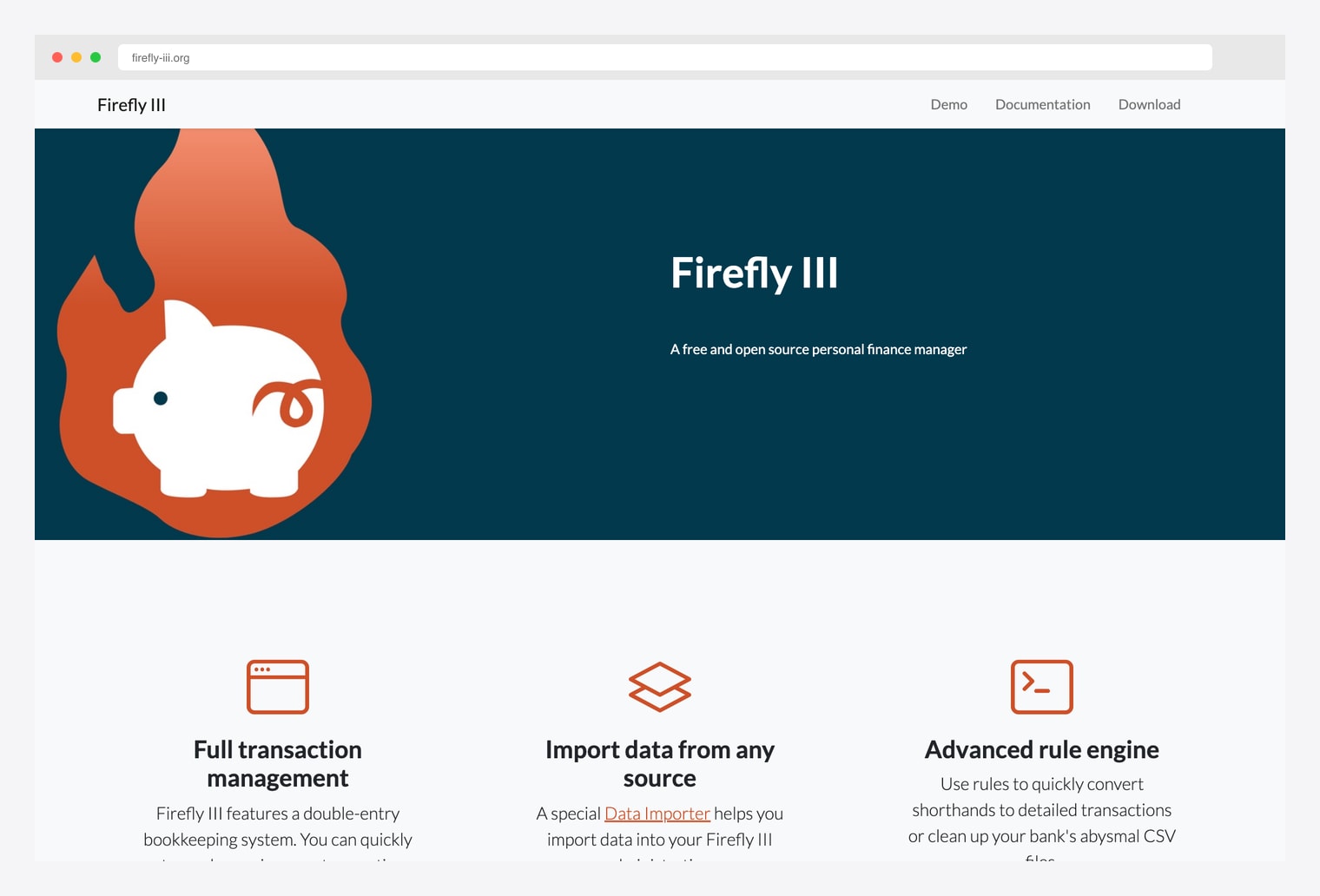
7. Firefly III
Why it stands out: Built on double-entry bookkeeping (every transaction has source + destination accounts). Companion Firefly III Data Importer pulls from CSV, Spectre, Nordigen / GoCardless EU banking APIs, and YNAB exports. Rule engine auto-categorizes imported transactions.
Note the AGPL-3.0 license — if you self-host as a service for others, the AGPL's network clause requires you to publish any modifications. Docker, Kubernetes, and most managed PaaS providers support it out of the box.
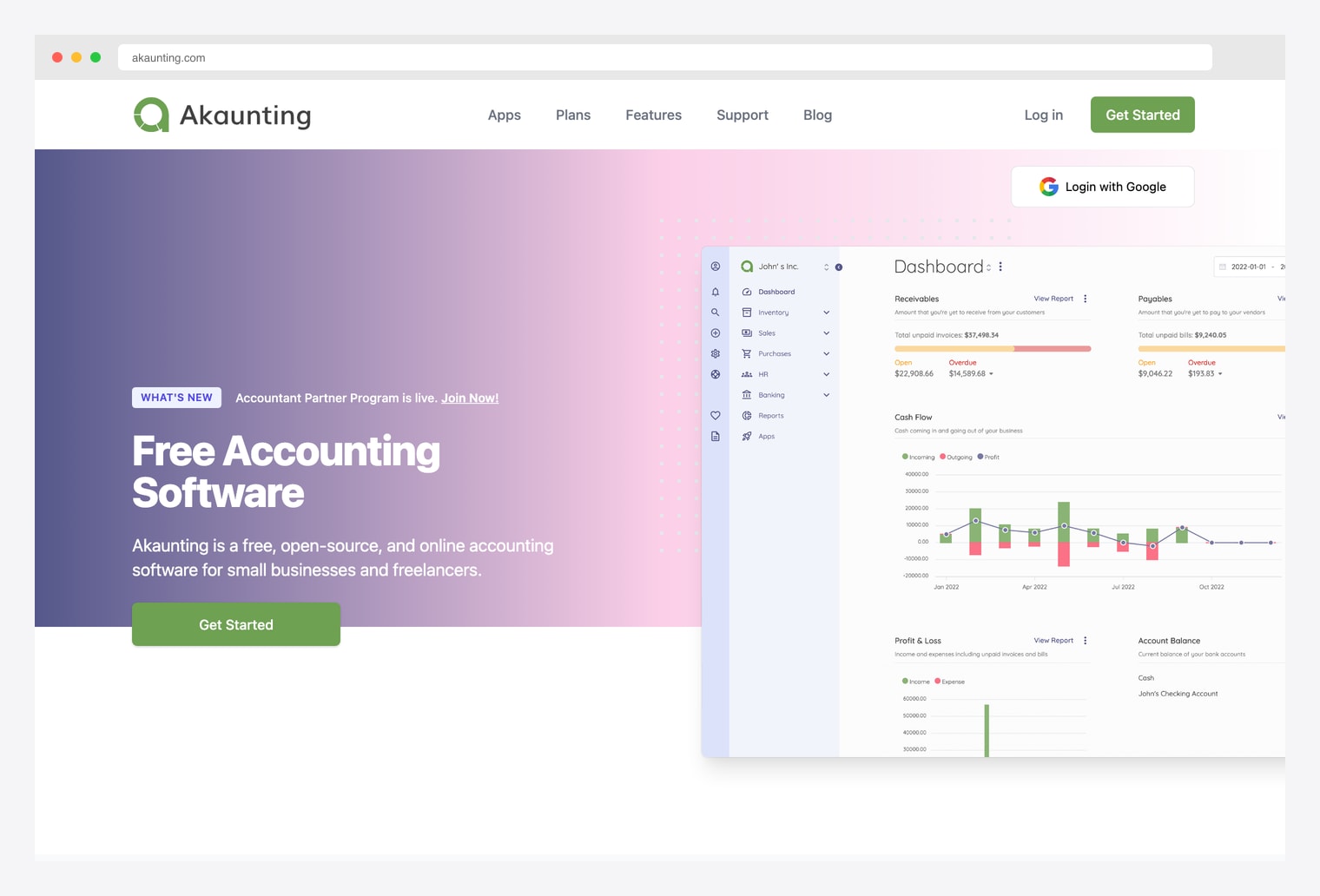
8. Akaunting
Why it stands out: Multi-company, multi-currency, multi-language double-entry accounting. Invoicing with PDF + online payment, bills, expenses, banking integration. The Apps marketplace adds payroll, inventory, CRM, e-commerce, and tax modules — some free, some paid.
Closer to QuickBooks / Xero in scope than Firefly III's personal-finance focus. Cloud tier (paid) handles hosting if you don't want to self-host.
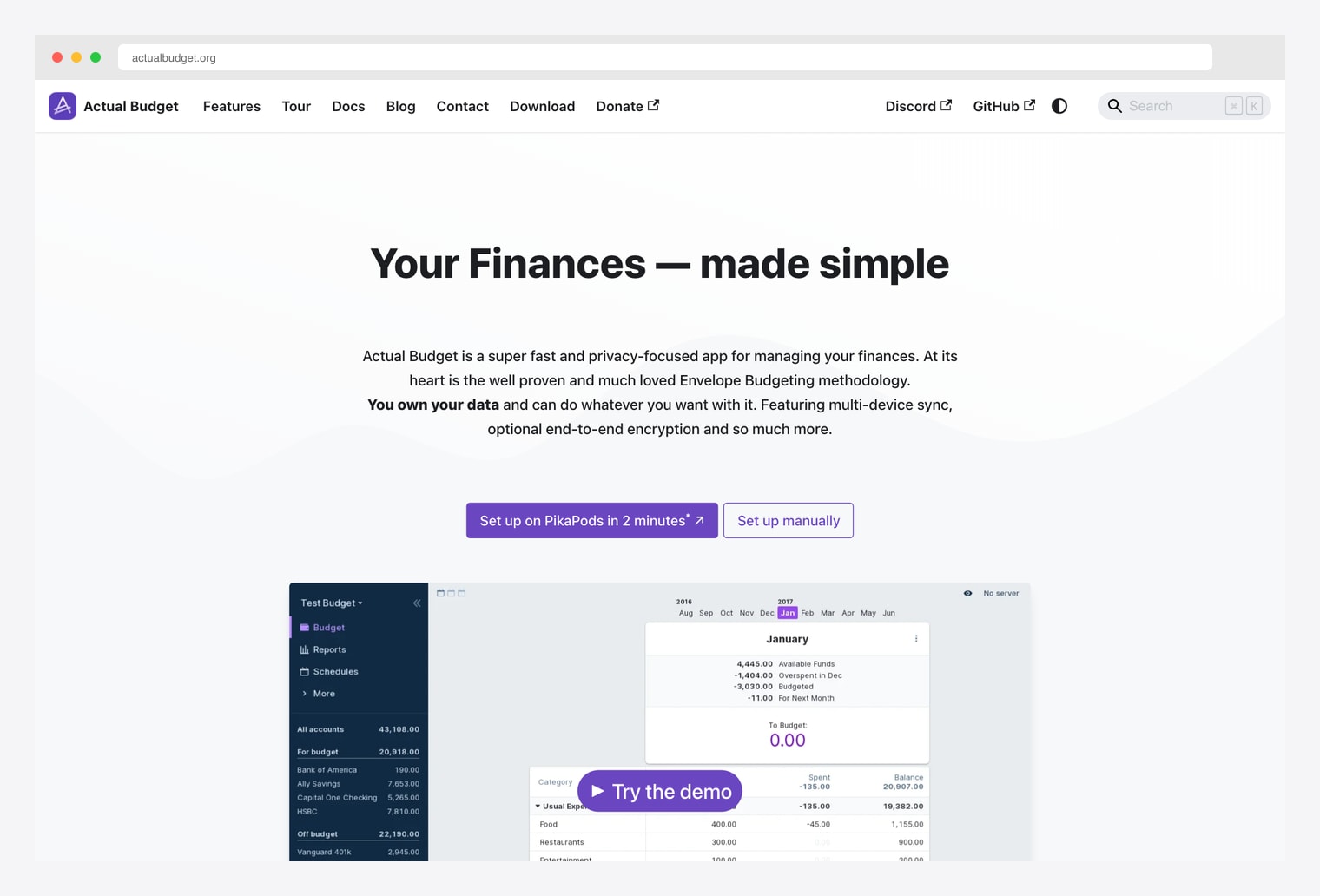
9. Actual Budget
Why it stands out: Local-first architecture: a SQLite database runs on each device, with multi-device sync and optional end-to-end encryption. MIT license means you can fork or commercialize without copyleft constraints.
Originally a paid product; the founder open-sourced it in 2022 and the community has maintained it since. Closest open-source equivalent to YNAB. One-click deploy via PikaPods.
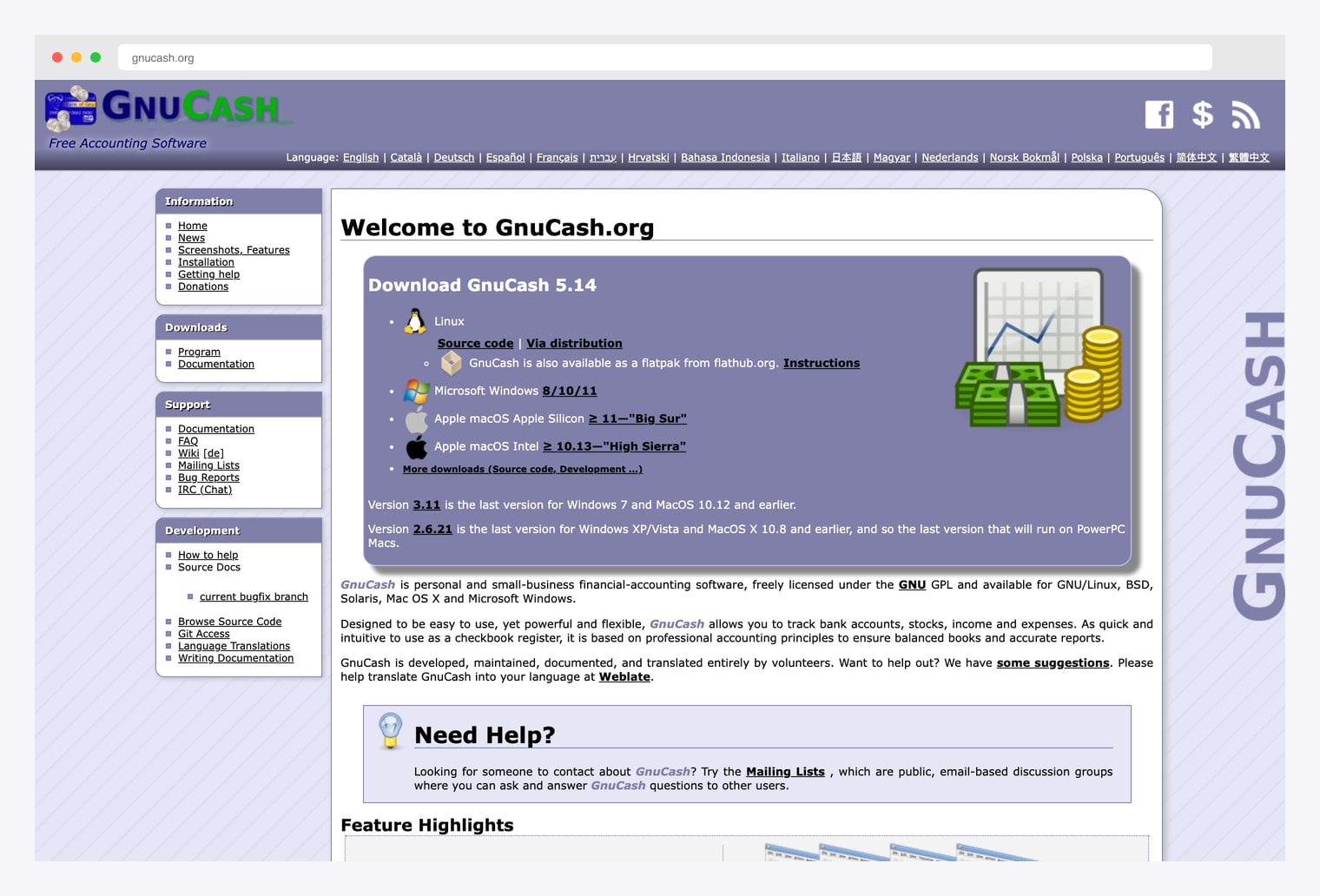
10. GnuCash
Why it stands out: Desktop-only — runs locally on Linux, BSD, macOS, and Windows with no cloud component. Double-entry bookkeeping, A/R + A/P, invoicing, payroll, stock tracking, OFX/QIF/CSV import.
First released in 1998 — by far the longest-running OSS accounting project in this list. Pick it when offline operation and full data ownership matter more than a modern UI.
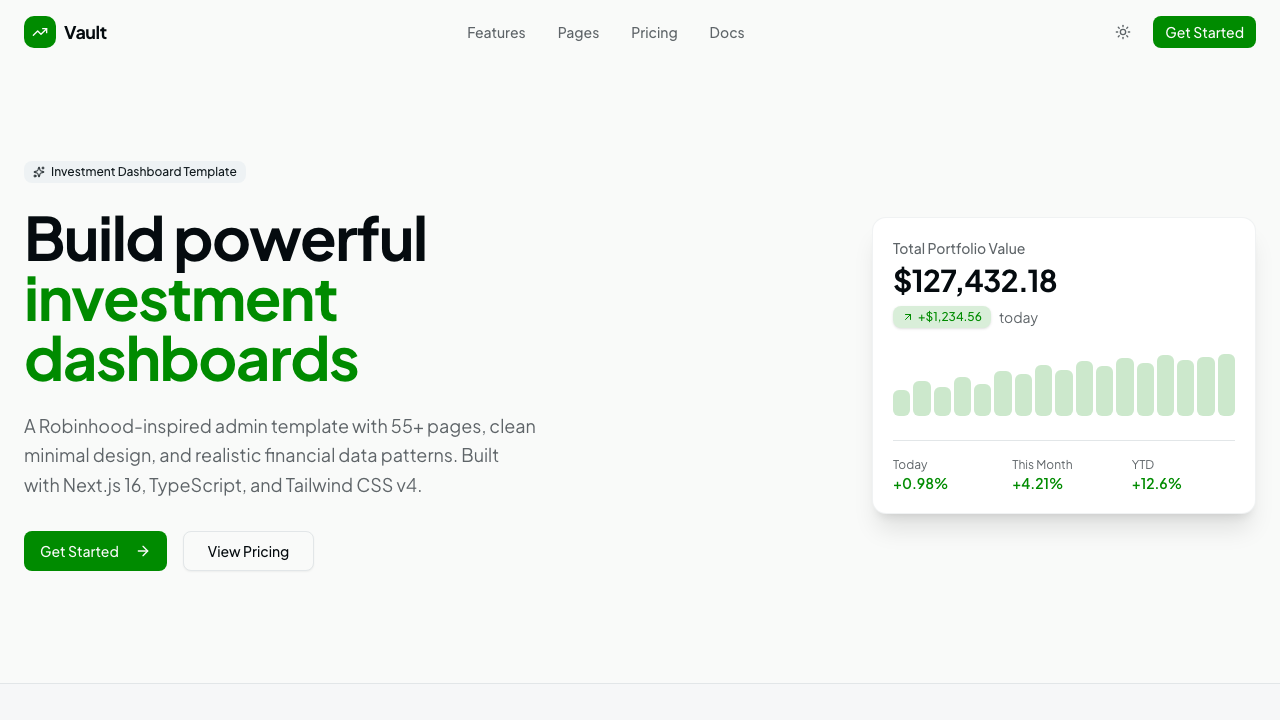
11. Vault Dashboard
Why it stands out: Where Fortress is dense and data-heavy, Vault goes the opposite direction with a Robinhood-inspired clean, minimal aesthetic. The portfolio overview with performance sparklines and the one-click trade interface feel polished enough to ship as-is.
Vault is built for consumer-facing investment platforms — the kind where simplicity builds trust. You get portfolio dashboards with gain/loss visualizations, stock detail pages with candlestick charts, watchlists, and transaction history views. The design language prioritizes white space and clear typography over data density.
Like Fortress, it runs on Next.js 16 with TypeScript, shadcn/ui, and Tailwind CSS v4. The 55+ page count includes onboarding flows, settings screens, and notification centers — all the secondary pages you'll need for a complete investment app.
12. Tremor
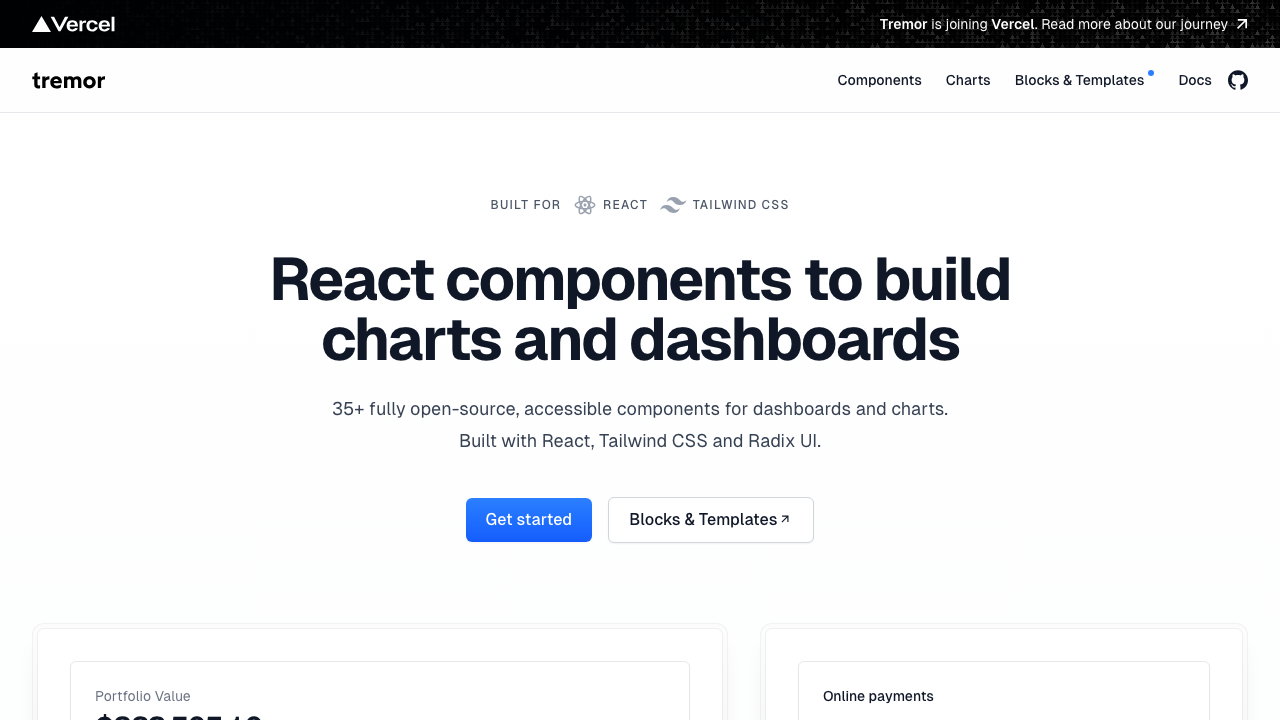
Why it stands out: Tremor gives you 35+ accessible, beautifully designed chart and dashboard components that snap together like building blocks. Recently acquired by Vercel, it's the best open-source option for teams that need to build custom financial UIs without starting from zero.
Unlike full templates, Tremor is a component library — you get bar charts, area charts, KPI cards, tables, and tracker components that you compose into your own layouts. Every component is built on Radix UI for accessibility and styled with Tailwind CSS for easy customization.
The library shines for fintech because the chart components handle large datasets gracefully, support real-time updates, and include built-in number formatting for currencies and percentages. The documentation includes financial dashboard examples you can copy directly.
13. SRTdash
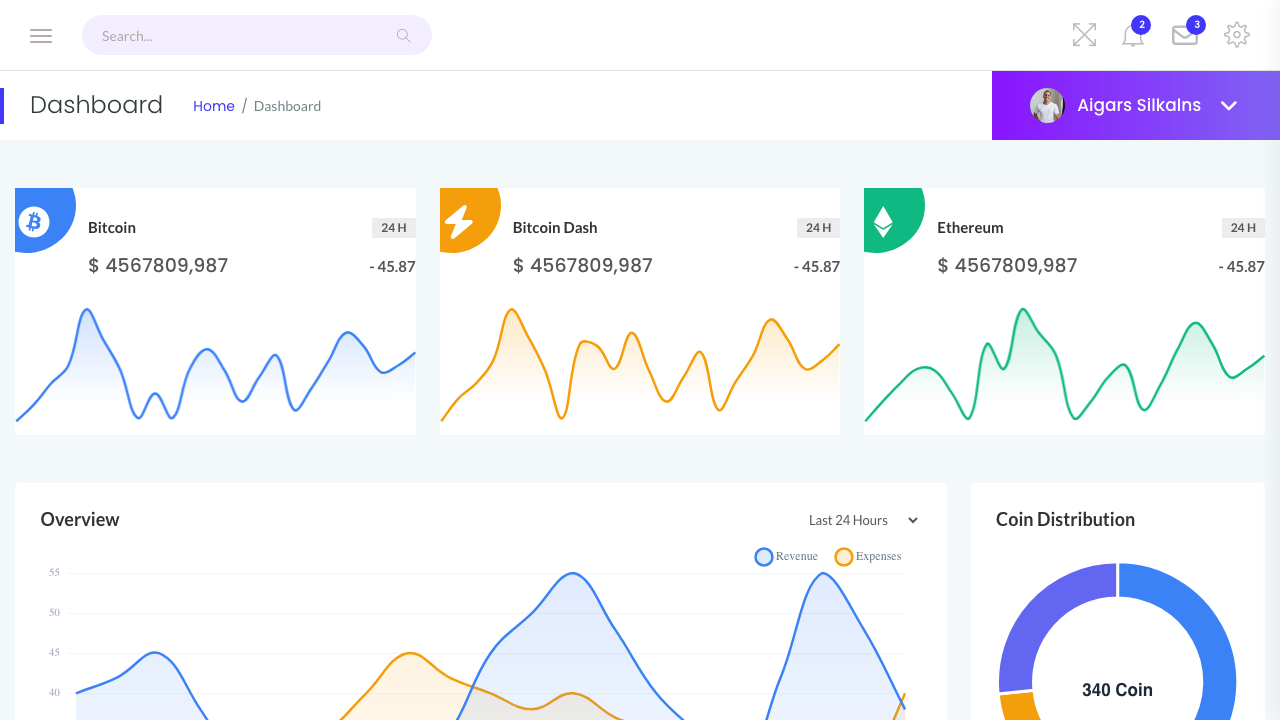
Why it stands out: SRTdash is purpose-built for crypto — Bitcoin, Ethereum, and altcoin price cards with 24h sparklines, a coin distribution chart, and revenue/expense tracking come ready to go. It's the fastest path to a crypto dashboard MVP.
Built by Colorlib, SRTdash is an HTML template specifically designed for cryptocurrency and ICO tracking. The dashboard features real-time coin price cards (BTC, ETH, DASH), portfolio overview charts, coin distribution visualizations, and a clean data table for transaction history.
The Bootstrap 5 foundation means it works everywhere, and the Chart.js integration keeps the bundle size small. SRTdash includes two dashboard variants — a crypto overview and an eCommerce version — so you can pick the layout closest to your use case and customize from there.
How to choose
Pick by use case (personal finance vs SMB accounting vs institutional trading vs core banking), then by stack (shadcn/Next vs Bootstrap HTML vs PHP Laravel vs Java).
For general dashboards, openthe 34-template dashboard guide.